Vegan Pad Thai

Pad Thai

I have always loved veggies and legumes and after I have had a few meat-heavy meals, it feels good to make something that is vegetarian or vegan. This recipe would be vegan if you were to leave out the fish sauce.

Whenever I am making something for the first time, I try to look at several versions of the recipe by different authors and then I take aspects that I like from several of them. The original recipe that caught my eye appeared at Food 52, a website that I go to several times a day. But like Frances, I also enjoy reading Mark Bittman, so some of this recipe comes from him, with the rest from me. I did read a few other recipes for Pad Thai but these were the two that made me want to try it on my own. See what you think.

PS: Leftovers made for a GREAT lunch!

Almost Vegan Pad Thai adapted from Gena Hamshaw and Mark Bittman

Yield: 4 servings

Ingredients

8 ounces pad thai rice noodles

For the sauce

6 Tablespoons unsweetened peanut butter (chunky or smooth)

1 Tablespoons tamarind paste (You will use this up in Indian food so don’t worry about what you will do with the rest)

2 teaspoons toasted sesame oil

3 Tablespoons low sodium soy sauce or tamari

2 Tablespoons maple syrup

1.5 Tablespoons sriracha or 1/2 teaspoon red pepper flakes (or more, to taste)

1/4 cup freshly squeezed lime juice

1/3 cup tap water

1 Tablespoon peanut oil

For the stir-fry

1 teaspoon garlic, minced

1 14-16 ounce block of extra firm tofu that has been pressed for at least 30 minutes (see note below)

1 Tablespoon grated ginger

2 medium carrots, cut into thin sticks

4-6 scallions, halved lengthwise and cut into one-inch pieces

1 small head Napa cabbage, shredded (about 4-5 cups) OR equal amount of snow pea pods

8 ounce package mung bean sprouts

For garnish

1/4 cup cilantro, chopped

1/2 cup unsalted dry roasted peanuts, chopped

Lime wedges

Directions

  1. In order for the tofu to have some “bite” I like to press it under bricks (books or heavy cans will work too) for at least 30 minutes and as much as an hour. This gets all of the excess liquid out and compacts the tofu. I often do this and then marinate and bake the tofu, but that is for another day.  You can even do this a day or two ahead and refrigerate it until ready to use.pressing tofu
  2. Prepare the sauce by whisking all of the sauce ingredients together in a bowl and set aside.
  3. Prepare the rice noodles according to the package. If made ahead, drain them and stir in a healthy teaspoon of toasted sesame oil to keep them from sticking too much. Do not over cook these or they will be like eating mush.
  4. In a large pan or wok, heat the peanut oil and stir in the garlic and ginger. After about 1 minute, add the carrots and scallions. Stir-fry for about 3 minutes. Now add the Napa cabbage or snow pea pods and the tofu and about 1 cup of the sauce.
  5. Stir-fry for 2 minutes and then add the rice noodles. Add more sauce until you have it the way you like it. Some people – like my husband – like LOTS of sauce. After about 2 minutes, add the mung bean sprouts. Stir-fry, moving everything constantly and gently so as not to break up the tofu or noodles, until warmed through.
  6. When warmed through, garnish with the peanuts and cilantro.

Home-made Beef Stock

Oh my goodness! If you want your house to smell AMAZING, make your own beef stock. And while I will admit that I use prepared stock – chicken, vegetable and beef – all the time, whenever I do make my own stock, I am in raptures and can’t believe I don’t do it all the time. The taste difference is incredible and the amount of protein that you derive just from the stock is much higher than even the best stock you can buy. The real barrier for me is not time since the active time in making beef stock is minimal; it’s space. I have a small kitchen with an average fridge and small freezer. However, once the temperature starts dropping and that wind is blowing off of the lake, I am making soup every week.

After I tell you how to make this wonderfully rich stock, I’ll show you how to make a delicious Italian Barley soup from it. Now you could make the soup with commercial stock. You  could even keep it Vegan by using a vegetable stock – and it will be good – very good even. However, if you want it to be great, make your own stock. Becasue this stock is so rich, a little goes a long way and you will almost always cut it with some water.

Beef Stock

Yield: About 5 quarts

Ingredients

5 pounds of beef rendering bones, stripped of all meat (This used to be the kind of thing that butchers just gave away, so was incredibly frugal. Alas, those days are gone.)

3 large yellow onions, quartered, with skins left on (it gives wonderful color to the stock)

1 bunch celery, chopped into thirds

1 bunch carrots, chopped into thirds  beef stock veggies

5 quarts of water

Directions

  1. Heat your oven to 400 degrees F.
  2. Place your bones on a heavy duty pan with 2-3 inch sides. You can use a disposable pan set on a baking pan or just line your pan with foil for easier clean-up.
  3. Place them in the oven for up to 2 hours, but be careful that they don’t burn. You want them toasty brown not black. Mine only took about 1.25 minutes this time. Every oven is different.  toasty beef bones
  4. In a large heavy duty pot or Dutch Oven with a tight fitting lid, place all of the veggies in the pot and add the bones and water. Bring to a heavy simmer, cover, and place in a 225 degree F oven for 12 hours or overnight.
  5. That’s IT! All you need to do is discard everything but the liquid when it has cooled and you are ready to go.  Using a strainer over a bowl makes this easy work. straining stock2This is so rich it will gel in the fridge. You can freeze some in ice cube trays for when you need small amounts, and freeze or store in the fridge the rest in one quart containers.  straining stock1

Lemon-Sour Cherry Pound Cake

IMAG0759_1When I have a day off, I like to indulge my love of baking – and I worry about who will eat it later…. A few thanksgivings ago, I found this recipe for a lemon cranberry pound cake and it was wonderful. The recipe, from the Joy of Baking, said that you could also use dried cherries and since I happen to have some lovely cherries from Nuts.com, I’m going with that today. The end product is a beautiful cake, bright with the tang of lemon and either the dried cranberries or sour cherries. It’s wonderful for a buffet and lasts for days, with the flavors intensifying, if well wrapped. It’s so pretty that I like to display it in my domed cake stand. And while I do not have a freezer large enough, you could make this ahead, except for the glaze, and freeze it in preparation for the holidays. Yep, it’s almost that time already.

Lemon – Sour Cherry Pound Cake taken from the Joy of Baking

Yield: 12 – 14 servings

Ingredients       Lemon pound cake ingredients

Dried sour cherries or cranberries

1/3 cup lemon juice

2 Tablespoons brandy

1 cup dried cranberries or sour cherries

Cake

2.5 cups unbleached all-purpose flour

1/2 teaspoon baking soda

1/2 teaspoon kosher salt

1 cup (2 sticks) unsalted butter at room temperature

3 cups granulated sugar

6 large eggs at room temperature

2 Tablespoons lemon zest

1/2 Tablspoon pure vanilla extract

1 cup sour cream or Greek yogurt

Lemon Frosting (optional)

1 cup confectioner’s sugar

2 Tablespoons fresh squeezed lemon juice

Directions

For Cranberries/Cherries

  1. Bring the brandy, lemon juice and cranberries/cherries to a boil in a small saucepan over medium high heat. Cover the pan and remove from the heat. Allow the mixture to cool completely, reserving the cranberries/cherries and the liquid separately.

For the Pound Cake

  1. Preheat the oven to 350 degrees F. Generously butter and flour a 10 inch bundt pan. If using a dark colored pan, reduce the oven temperature to 325 degrees F.
  2. In a medium bowl, whisk the flour, baking soda and salt together.
  3. In the bowl of a standing mixer, beat the butter and sugar until light and fluffy. Add the lemon zest, vanilla and eggs, one at a time, beating well after each addition. Scrape down the sides of the bowl.
  4. With the mixer on low, add 1/3 of the flour mixture, alternating with 1/2 of the sour cream, beating just until the batter is smooth.
  5. Stir in the drained cranberries/cherries by hand.
  6. Pour the batter into the prepared bundt pan and smooth the top.  lemon pound cake ready for oven
  7. Bake for approx. 60 – 75 minutes or until a toothpick inserted into themiddle of the cake comes out with just a few moist crumbs.
  8. Remove from the oven and place on a rack to cool. After 5 minutes, lightly brush the top of the cake (it’s really the bottom) with half of the reserved liquid from the cranberries/cherries.
  9. After 10 more minutes, loosen the sides of the pan with a sharp knife and invert onto a wire rack. Immediately brush the top and sides of the cake with the remaining cranberry/cherry liquid. Cool the cake completely before frosting or dusting with powdered sugar.

Lemon Frosting  IMAG0755

  1. In a bowl, using a whisk, combine the confectioner’s sugar with the lemon juice. You want the icing to be thicker than a glaze but still thin enough that it will run down the sides of the cake. If necessary, add more lemon juice or powdered sugar accordingly.
  2. Pour the frosting over the top of the cake, allowing the icing to drip down the sides. Allow the icing to dry completely before covering and storing the cake.

Pumpkin “Crème Brûlée”

In the span of a week, NY temperatures have gone from 90 degrees F a day to 55.  I feel like I am always surprised, nay shocked, by Fall, and this year was no exception.  In any case, with the drop of the temperature, it seemed that it was appropriate to begin the season of making chili, pumpkin recipes and all else “Fall”.

thumb__MG_6042_1024

While flipping through an old Mark Bittman book that I have loved for years, I came across a Pumpkin “Crème Brûlée” — left in quotes since it’s not truly a custard but it is as delicious as Mr. Bittman says in any case!

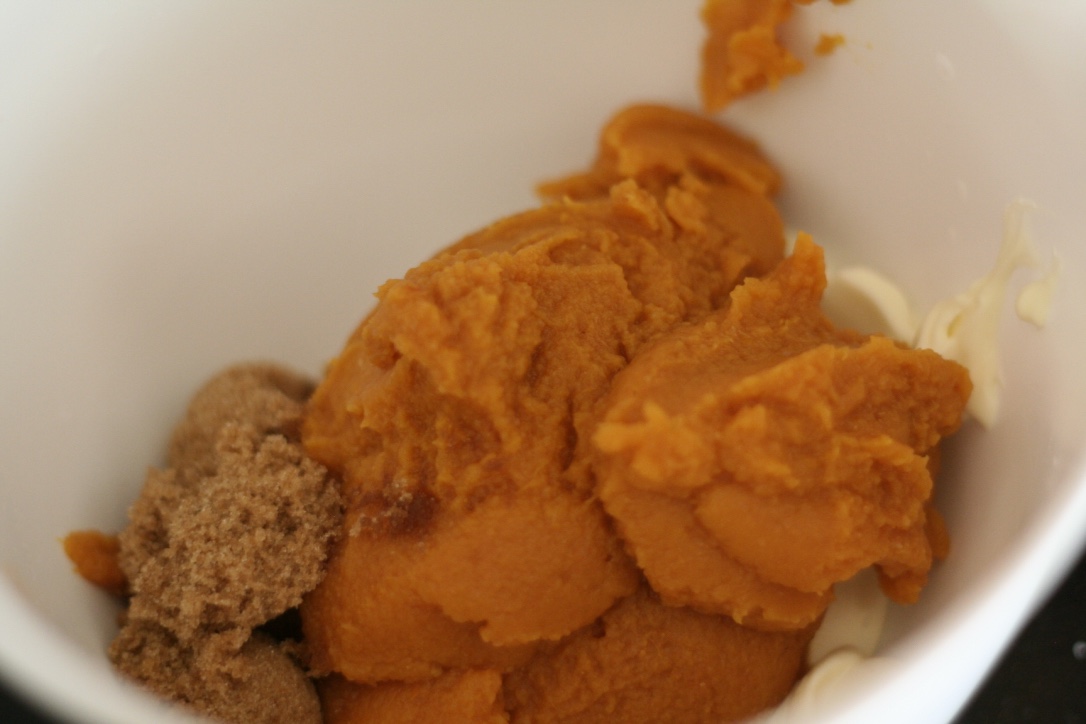
thumb__MG_6034_1024Ingredients

  • 1 small can of pumpkin puree
  • 8 oz mascarpone cheese
  • 1/4 cup brown sugar
  • 1/2 tsp cinnamon
  • pinch allspice
  • pinch kosher salt
  • brown sugar for sprinkling

Directions

  1. Whisk the mascarpone, pumpkin puree and brown sugar together in a bowl until combined.  Add cinnamon, allspice and salt and whisk.
  2. Pour into 6 oz ramekins.  When ready to serve, sprinkle brown sugar in a thin layer on the mixture in the ramekins.
  3. Set the oven to broil.  Stick the custard cups under the broiler for 5 minutes.
  4. Serve immediately.

Apple pie with cheddar cheese crust and hard sauce

apple pie with hard sauce

Yesterday I was playing around with my standard apple pie recipe. I made a crust with cheddar cheese in it and I will serve the warm pie with a hard sauce using a good Kentucky Bourbon. This is my fall dessert to go with my short ribs in buckwheat honey and brown ale. I was at the farmers’ market yesterday and shlepped home some wonderful heirloom baking apples and beautiful green and yellow beans. I also picked up fresh arugula – not the pretty but anemic tasting arugula you buy at the grocery store (Yes, even at Whole Foods!) This arugula has that wonderful peppery bite and will be a good foil for the rich meat, which I will serve over a bed of polenta.

But back to the pie. My mother made THE best apple pie – hands down. Part of it was the fact that apples in those days had more flavor, were local and we got a kind in the East, where I grew up, that I can’t get in Chicago. Thankfully now I have access to some pretty good apples so I have high hopes for this pie. The crust is a bit of an experiment.

NOTE: So now we have eaten the pie and I have a few comments. The crust is not as flaky as the classic Crisco crust I make; however, it was VERY easy to work with and was still better than any store bought crust. The cheddar cheese did not come through as much as I would have liked, so assuming I wanted to try it again, I would sprinkle additional cheese on top of the crust, instead of sugar, before baking. The hard sauce was wonderful with the warm pie, but so was vanilla ice cream.

Lisa’s Apple Pie with Cheddar Cheese Crust and Hard Sauce

Yields: 8 servings

Ingredients

Dough for deep dish double crust 

2 2/3 cups unbleached all-purpose flour

4 Tablespoons finely shredded sharp cheddar cheese

1 teaspoon Kosher salt

about 5 cracks of fresh black pepper

1 stick Crisco baking stick from the freezer

8 Tablespoons ice cold water and 2 Tablespoons plain Greek Yogurt or sour cream

For the Filling

6-7 good baking apples (either one kind or a mix), peeled, cored and thinly sliced – about 3+ pounds     apple slices

3/4 cup granulated sugar

1 Tablespoon strong cinnamon, like Saigon cinnamon

1/4 teaspoon Kosher salt

3 Tablespoons unbleached all-purpose flour

1 Tablespoon butter

Zest of one lemon

half of a lemon to keep apples from browning

2 Tablespoons of cream (you can use milk or soy milk or an egg yolk mixed with 1 Tablespoon of water) and sanding sugar (optional)

For the Hard Sauce – by Ree Drummond

1 stick of slightly softened butter

1.5 cups of confectioner’s sugar

2 generous Tablespoons of Kentucky Bourbon or Rum or Brandy

Directions

  1. In the bowl of a food processor, combine the flour, cheddar cheese, pepper and salt. Pulse a few times to mix well. Add the frozen Crisco stick (divide the stick into 16 pieces). Pulse until the mixture is the size of frozen peas.
  2. In a small bowl, whisk together the yogurt and ice water until well combined. Pour it over the flour mixture and run the machine just until the dough starts to form a ball.  It will seem relatively wet compared to other pastry. Don’t worry! Turn it out onto waxed paper or plastic wrap and divide the dough into two pieces and form two disks. (Make a ball and then flatten it.)  Wrap the dough and refrigerate it for at least one hour or overnight. This can be made a couple of days ahead if you like.
  3. When ready to bake the pie, preheat the oven to 425 degrees F. Have a deep dish pie plate ready to use. Remove the dough from the fridge.
  4. On a lightly floured cold surface or on a pastry cloth (please buy one) place one disk of cold dough. Using a rolling pin, covered with a pastry sleeve, roll out the dough by turning the disk in one quarter turns every couple of rolls. Roll from the center outwards. The turning prevents the dough from sticking. If you need to add a few sprinkles of flour periodically, do so, but don’t add too much. Just enough to keep things from sticking. Roll the dough into a circle (more or less) a couple of inches larger than the baking plate.
  5. Placing your rolling pin at one end of the dough, gently flip up the pastry cloth to force the dough over the rolling pin. Gently roll the dough overrolling crust onto rolling pin the rolling pin and lift it into the pie plate. Gently roll back the rolling pin so that the rolling crust into pie platedough falls off into the plate.
  6. You should have an overhang of an inch or two. Try to trim it with a knife so it is relatively even. If you can, place the pie plate and dough in the fridge while you work on the filling.
  7. After you peel the apples, rub them lightly with the lemon juice and place the slices in a bowl with the cinnamon, sugar, salt and flour. Gently toss with a spatula and set aside.
  8. Take your second dough disk out of the fridge and roll that out to be a couple of inches larger than the first disk.
  9. Remove the pie plate from the fridge and fill with the apples, mounding them in the middle. Try to make sure there are very few gaps between apples. Dot the apples with butter.  apple pie ready for top crust
  10. Carefully pick up the rolled out dough onto the rolling pin and place over the top of the pie. Don’t panic if there are a few minor splits. We can fix that. Fold the edges of the top and bottom crust together and under. If there is too much dough, feel free to trim. You want to end up with a one inch edge that is about double the thickness of the rest of the dough. You can either crimp the dough, pinching it between your fingers or you can take a fork and press down on the dough.
  11. Make four slits in the top of the dough (try to be a bit decorative) to allow the steam to escape. If you had any splits in the dough, take a bit of excess dough and roll it out thinly. Either using a cookie cutter or a knife, cut out a leaf or an apple shape. Using your finger, wipe water on one side and “glue” it over the cuts. (You still need the steam holes so don’t cover them!)
  12. Brush with either an egg yolk mixed with one Tablespoon of water or brush with milk or cream and sprinkle on sanding sugar. This last part is optional but it is pretty.    apple pie ready for baking
  13. Place the pie on a baking sheet to catch any drips and bake for 15 minutes at 425 degrees F. Then lower the oven temperature to 375 degrees F. and bake for approximately 45 minutes more until the crust is lovely and golden brown. Don’t worry if there is some liquid oozing out. If the crust edges seem to be browning too quickly, cover them with some foil or a pastry ring. If you plan on making pies, treat yourself to one. They are not expensive and sooooooooooo much easier to use than foil.
  14. While the pie is baking, make the hard sauce. It can be made ahead and will keep in the fridge for at least a week. Be sure to take it out of the fridge a few hours before serving. Of making the same day as the pie, just leave it out, covered.
  15. Beat the butter with an electric mixer until light and fluffy. Carefully add in the confectioner’s sugar and beat on low until it starts to be incorporated. Then add in the Bourbon and whip until light. Put over into a bowl and serve over warm pie or cake or crumbles.
  16. Remove the pie to a cooling rack. The pie can be cut when slightly warm.

NOTE: If you have any left-over dough, you can roll it out when you are ready and cut out shapes to bake dookies – a name my older sister gave to them when she was a little girl and it stuck (dough cookies). Because this dough has cheddar cheese, I would brush the shapes with a bit of cream and sprinkle with cheddar cheese. Otherwise, you can sprinkle the cookies with a bit of sugar or sugar mixed with cinnamon. Bake at 375 degrees F for about 10-12 minutes.

Short Ribs with Brown Ale and Buckwheat Honey

short ribs with polenta

Today is one of those dismal grey days, where it can’t quite decide if it will rain or just spit at you! The temperature has begun to drop and this makes me want soups and stews – those deep, rich blends that get better when made ahead and that will last me throughout the week. Today I’m trying a recipe from the Food 52 blog that Frances introduced me to. Of course, I have to put my own spin on it, so here is my version. The whole house will just smell wonderful. It calls for buckwheat honey and you really shouldn’t substitute that. Buckwheat honey has a very rich, earthy, distinctive flavor that will perfectly compliment the brown ale and stone ground mustard. If you can’t find it in your store, then you can always get it online where I get so many things – Amazon. I also use it when I am baking my vegan challah. It lends a richness and color to the challah that would otherwise be missing because I am not using eggs.

Short Ribs with Brown Ale and Buckwheat Honey – adapted from Merrill Stubbs

Yield: 6-8 servings

Ingredients

2 Tablespoons Olive Oil or Grapeseed Oil

5 pounds of meaty shorty ribs (ask your butcher to cut eat rib into 2 pieces, with some pieces on the bone and some not)

Kosher salt and fresh cracked black pepper

1 very large onion, chopped

6-8 cloves of garlic, minced

3 generous Tablespoons stone-ground mustard

1/3 cup buckwheat honey

18 ounces good quality brown ale (I just went to my local liquor store and chose a bottle that had notes that sounded good to me and was within my budget)

1 bay leaf (fresh if possible, but dried is fine)

3 large carrots, peeled and sliced into rounds about 1/4 inch thick

1 very large or 2 smaller parsnips, peeled and sliced into rounds or half moons depending on the circumference

2-3 Tablespoons flat-leaf parsley for garnish

Directions

  1. Heat the oven to 350 degrees F. Put the oil in a 7 quart heavy Dutch oven over medium heat. Season the ribs generously with the salt and pepper and brown them on all sides. Don’t crowd the pan or the pieces won’t brown properly. I did this in three batches, placing the finished pieces on a platter.
  2. After you have removed the short ribs from the Dutch oven, see how much fat is left in the bottom of the pan. Don’t worry about any brown bits – they will be dealt with, I promise! My ribs actually had very little fat, so I didn’t need to pour any off. You want to end up with 2-3 Tablespoons of fat/oil in the Dutch oven. Then add the onoin and garlic and stir until softened and it begins to carmelize. Use a wooden spoon and scrape up the brown bits as you go. This should take about 5 minutes.
  3. Stir in the mustard, honey, brown ale and bay leaf. Return the meat to the pan and make sure that the sauce coats the meat.
  4. Bring the sauce to a simmer and cover the pan tightly. Place in the oven for 1.5 hours. Then add in the carrots and parsnip and cook for another hour.
  5. If you want a thicker sauce, you can remove the ribs and veggies with a slotted spoon. Skim as much fat as possible (If you make this ahead and can refrigerate it, skimming the fat becomes a cinch. If not, it’s still not that hard.) Reduce the sauce by simmering it until it reduces to the desired thickness. Adjust any seasoning, adding more salt and pepper if you like. Add the meat and veggies back and spoon the sauce over the top. Serve it with mashed potatoes, noodles or polenta and garnish with some chopped parsley. A green salad and an apple tart and this is a dish fit for friends and family.