Okay, this is definitely NOT something you make on a whim. However, if you follow all of the steps, it may be somewhat time-consuming, but it really isn’t too difficult and the result is a stunning WOW dinner. I had eaten kibbe in Israel, but had never made it before; however, with Matthew home and me taking this week off from work, I decided to give it a try. It was definitely worth the effort and I would make it again. If you are not familiar with kibbe, there are many different kinds and each Middle Eastern/North African country has their own twist. Syrian cooking is very sophisticated and this version combines ground meat with spices and sweet fruit. It is both sweet and tart and the flavors and textures are layered and complex. The presentation is lovely. Generally it is served with a rice pilaf, but I served mine with a matzah salad instead. If you are feeling ambitious, just follow the steps and I guarantee you won’t be sorry.
Syrian Apricot and Sour Cherry-Stuffed Meat Rolls with a Cherry Sauce (Kibbe Gheraz) adapted from Jewish Holiday Cooking by Jayne Cohen
Yield: 6-8 servings
Ingredients
For the Kibbe Shell
2 cups of long-grain white rice (I used Basmati)
1 pound extra-lean ground beef, preferably grass-fed
1.5 teaspoons Kosher salt
For the Kibbe Filling
1/2 pound ground lamb or beef (I used ground lamb for this part)
2 Tablespoons finely chopped celery, including some of the leaves
1 Tablespoon of a fruity EVOO
1.5 teaspoons Kosher salt
1 teaspoon ground allspice
Rounded 1/2 teaspoon ground cinnamon
4 Tablespoons lightly toasted pine nuts
About 6 ounces, mixed, of dried apricots and sour/tart dried cherries, covered with hot water for about 1.5 hours until plumped. Then drain, them and pat dry. If the apricots are whole, split them into halves with your fingers. 
4 Tablespooms EVOO
For the Cherry Sauce
1 large onion, diced (about 2 cups)
1 cup unsweetened prune juice
One 15 or 16 ounce can of sweet cherries in heavy syrup
3 Tablespoons Pomegranate molasses or temerhindi (I used pomegranate molasses)
Juice of one lemon
1.5 teaspoons of granulated or raw sugar
Directions
For Kibbe Shell
- Soak the rice in warm water for about 1 to 2 hours, changing the water every 20 minutes or so. Drain the rice and dry it with a tea towel or paper towel.
- Grind the rice in a food processor until it resembles meal. Add the extra-lean beef and the salt and puree the mixture, using the pulse motion until well combined and everything has taken on a lovely pink hue.
For the Kibbe Filling
- In a medium-sized bowl, mix the lamb or beef, celery, oil, salt, allspice and cinnamon until well-blended.
Assemblage
- Divide the rice/meat shell mixture into four parts. Divide the filling ingredients into four parts.

- Place one portion of the shell mixture between 2 sheets of plastic wrap, and using a rolling pin or bottle, roll out into a rectangle, approximately 5 by 7 inches.

- Remove the top layer of plastic wrap and cover first with one portion of the meat filling. Replace the top piece of plastic wrap and roll the meat out, leaving a small border along the sides.

- Remove the top layer of plastic and sprinkle iwth one quarter of the pine nuts, followed by one quarter of the apricot/cherry mixture.


- As you would a jelly roll, carefully roll up the kibbe from the short end, using the plastic wrap to help you.


Pinch both ends together and gently press around the seam area to make sure that the roll is well sealed. Wrap the finished roll in plastic wrap and refrgerate while you repeat the process with the other 3 sections. Refrigerate all of the rolls for at least 30 minutes.
Cooking
- In a heavy-bottomed, deep saute pan with a lid that is large enough to hold the rolls in a single layer, heat 2 Tablespoons of EVOO until hot but not smoking. Add two of the rolls, seam-side down and fry over medium heat until golden, but not brown. Using two spatulas or wooden spoons, carefully turn the rolls until all sides have browned. Do NOT allow a hard crust to form! Transfer the finished rolls to a platter and repeat the process with the remaining rolls.
- Using the same pan, make the cherry sauce. If the oil in the pan is dark, wipe it out and add 2 Tablespoons of fresh oil. Mine was fine and I didn’t need to do this. Add the onion, a sprinkling (about 1/2 teaspoon) of Kosher salt and cracked black pepper. Cook, stirring occasionally until the onion has begun to soften and color.
- Stir in the prune juice, cherry liquid from the canned cherries, pomegranate molasses, juice of 1/2 lemon, sugar and additional salt and pepper to taste.
- Bring the sauce to a boil and add back the kibbe rolls. Reduce the heat to a simmer, spoon sauce over the rolls, cover the pan and cook for 35 minutes, basting once or twice.

- Add in the canned cherries and simmer, covered for 15 minutes more.
- Transfer the kibbe to a platter and keep warm in the oven. You can reduce the sauce to thicken it a bit by allowing it to boil, uncovered over high heat for a few minutes. Taste the sauce and adjust the seasonings if necessary. I didn’t need to change a thing.
- When ready, remove the kibbe rolls from the oven and cut them into thirds on a diagonal. Spoon the sauce over the top and prepare to be wowed!


 There are so many reasons to be happy and grateful when Matthew and Frances come to visit, and one of my joys is that I get to cook anything I want and I know it will be eaten with gusto. They have no food quirks, allergies or limitations and because they both work out every day I don’t have to worry about them gaining weight.


 This salad was such a hit at the Seder that I am making it again in a much smaller quantity to accompany tonight’s Sockeye salmon. While I am making this for Passover, there is absolutely no reason that my salads can’t be eaten during the rest of the year – or at least throughout spring and summer. And, in fact, I am always preparing some salad or other since veggies and fruits make up a large part of our diet. This salad is adapted from Madhur Jaffrey and sounded wonderful so I gave it a try. For the Seder I made a much larger amount and used both the plain red radishes and daikon radish. I also used a couple of blood oranges in addition to navel since I happened to have them and they lent such a lovely color and unique taste. Tonight’s version only has the navels.

 Turn off the heat while you make the fish balls.
 When all of the fish balls are nestled in the sauce, bring the sauce to a simmer on a low heat. Cover the pan and cook the fish balls for 20-25 minutes until the fish balls are firm and cooked through, turning them once. Turn off the heat and adjust any seasonings of the sauce. Allow the fish balls to cool in the sauce and refigerate over night or up to 48 hours.
 This cookie is a crispy, airy chocolatey delight that crumbles and melts in your mouth on contact. I admit that I have never been a huge meringue fan. I like the idea of meringue but the egg white is my least favorite part of the egg and let’s face it, that’s what meringue is. However, by making this vegan, most of that egg whitiness that I dislike just doesn’t seem to be there. Since aquafaba reacts like egg whites when making meringue, my feelings might just be purely psychological, but there you go. Give these a try for Passover.
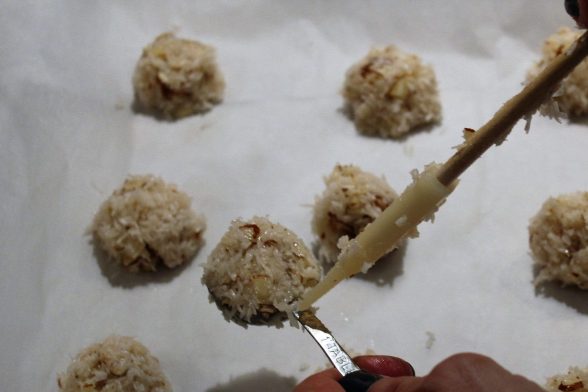
 Please don’t buy those macaroons from a tin. It really is very easy to make your own and the difference is quite extraordinary. No longer will macaroons be the butt of jokes the way that fruit cake is in December. And of course, when you make your own, you can opt to decorate them by dipping part in chocolate or leaving them pure. Last year I read a recipe for a cinnamon almond macaroon in the Off Duty section of the weekend Wall Street Journal. Somehow cinnamon just didn’t sit right with me and when I was making them, I simply skipped that step. I think I made the right decision, but feel free to add it back if you like. After you taste these, there won’t be any more jokes about macaroons surviving the apocolypse. This year I am making these vegan, substituting aquafaba for egg whites so my godson can eat them since he is allergic to eggs.