Gingerbread

Gingerbread1

When my son was growing up, I used to take great joy in treating him (and my husband) to home-baked goods. But even as someone who loves to bake, sometimes I just wanted something simple and fast that I could put together no matter how late is was or how tired I was. This gingerbread recipe comes from my trusty James Beard on Bread book. It is simple, delicious, makes the house smell the way houses should smell when you walk into them and did I say it was simple?? I’m sure that you can “tart” it up as everyone seems to feel a need to do today, but trust me when I say that it needs NOTHING except maybe some additional fresh, sweet butter. Serve it with dinner instead of a roll or as an afternoon snack with a glass of milk or with a cup of tea or coffee for breakfast. But serve it! And good news for those with egg allergies – there are no eggs in this recipe.

Gingerbread 

Yield: One 9 x 9-inch pan

Ingredients

1 cup light or dark, unsulphured molasses (I use dark)

1/2 cup boiling water

5 Tablespoons softened, unsalted butter

1/2 teaspoon Kosher salt

2 teaspoons ground ginger

1 teaspoon baking soda

2 cups, all-purpose, unbleached flour

Directions

  1. Place the molasses and softened butter in a medium mixing bowl. (A trick for measuring out the molasses is to lightly spray a glass measuring cup with a spray like PAM and then add the molasses. The molasses will pour right out. This works with honey as well.)
  2. Add the boiling water and stir until well mixed and the butter has melted.
  3. Add the baking soda and stir lightly.
  4. Sift in the flour, ginger and salt only enough to moisten and mix the ingredients. Don’t worry if it isn’t perfectly smooth. Do not over mix!
  5. Turn into an ungreased 9 x 9 x 2-inch baking pan and place in a cold oven. Set the temperature to 375 degrees F. Bake for 25 to 35 minutes (ovens vary) or until the top springs back when lightly pressed and the bread begins to pull away from the sides of the pan. Then inhale. This can be eaten immediately. Leftovers are also good but nothing beats it fresh from the oven. Gingerbread2

Focaccia

img_2648If you have been following my blog then you know that I broke my foot over Thanksgiving, so between that and the polar vortex we have been under, getting out has not been a priority. That doesn’t mean, however, that I am willing to compromise on food. I had made some eggplant Parmesan for dinner and knew that we would be having soup or pasta in the next couple of nights. Unfortunately, I didn’t have any good bread in the house to go with these dinners and as my readers also know, I LOVE  good bread. None of this no carbs nonsense for me. I would much rather go without meat than bread. Okay, I’ll get off of my soapbox now.

I decided on focaccia which is really quite simple to make. While I don’t have a brick oven, I do have bricks in my oven as well as a pizza steel. The bricks I picked up from a construction site… They stay in my oven all the time and have also come in handy when I need to press something down like my tofu. No buildings were harmed in the process.

I started with a recipe from The Italian Baker by Carol Field. I have made a few things from this cookbook and so far they have required some adjustments. I also like to improvise a bit so since this recipe makes three focaccia, I chose a different topping for each: sun-dried tomato, olives and just sea salt and fresh cracked black pepper. Once you learn the basics, you can fool around. Sometimes the results are amazing and sometimes not, but rarely is something such a failure as to be inedible. So loosen up and have fun. Try this with my White Bean Soup with Pesto and Chorizo. And as an extra bonus, these focacce also make great sandwich bread, split like you are dividing a cake for layer cake. Try it with homemade pesto, herbed turkey breast and arugula or radicchio.

Focaccia alla Genovese  

Yield: Three 9-inch round focacce or two 10.5 inch x 15-inch rectangular focacce

Ingredients

2.5 teaspoons active dry yeast (one packet, although this is a very inefficient and expensive way to buy yeast)

1/4 cup warm tap water

2.25 cups plus 1 Tablespoon tap water, room temperature

2 Tablespoons EVOO plus more for the pans

About 5.5 cups of flour ( I used a mixture of 3 cups all-purpose and 2.5 cups of bread flour)

1 Tablespoon fine sea salt

Fresh or dried herbs (optional)

Directions

While this can be made in a machine, it is so easy to make by hand so I am only including instructions for that method. If you want to make it by machine, buy the book!

  1. Stir the yeast into the 1/4 cup of water in a large mixing bowl. (My house tends to be on the chilly side because I like it that way, so I always run hot water to rinse my bowl before adding yeast.) Allow to stand for about 10 minutes. You won’t see a whole lot happening but the yeast is blooming.
  2. Stir in remaining water and EVOO. Add 2 cups of the flour and the salt and stir until smooth. (If you like, you can add about 2 to 3 Tablespoons of fresh chopped herbs like rosemary or sage or 1.5 Tablespoons dried at this point.) Stir in 3 more cups of flour, one cup at a time, until the dough comes together. Knead on a lightly floured surface, adding flour as necessary for about 8 to 10 minutes or until the dough is velvety and soft but not sticky.
  3. Form the dough into a ball and place it in a lightly oiled bowl, rolling the dough to cover it with the oil. Cover the bowl with plastic wrap and allow it to rise until doubled, about 1.5 hours. Since my house is pretty cool, I warm my oven to 170 degrees F. while I am preparing the dough, then turn it off. I place my dough in the slightly warm oven to rise. You don’t have to do this, but if your house is on the cool side it may take a little longer for the first rise. If you are okay with this, it is not a problem for the dough.
  4. Punch down the risen dough and divide into 3 equal parts for the round focaccia. (You could weigh these out if you want to be exact or you could eyeball it like I do. I like to live on the edge!) Shape each third into a thick disk and allow it to rest for about 10 minutes. I spray a bit of PAM on each disk so the dough doesn’t dry out. You could also cover them lightly with plastic wrap. After about 10 minutes, the gluten should have relaxed enough that you can easily roll out each to a 9-inch circle. Place each round into a well-oiled 9-inch pie or cake plate. Cover the dough with a dish towel and allow them to rise for 30 minutes. I just leave them on my counter for this part.
  5. After the dough has risen a bit, use your fingers to aggressively “dimple” the dough, leaving indentations that are about 1/2 inch deep. Just poke the dough. Cover the pans with a damp towel. I just wring my towel(s) out in warm water until there is no dripping. Allow the dough to rest for 2 hours. By this time the dough should be just about to the top of the pans. After 1 hour, heat your oven to 400 degrees F. This is especially important if you are using a pizza stone or steel or bricks. You want the oven as hot as possible since a home oven cannot achieve the temperatures of a brick oven.
  6. Drizzle EVOO all across the top, making sure that all of the dimples have oil in them. Now it’s up to you. You can simple sprinkle sea salt or Kosher salt and fresh cracked black pepper on top or you can add some fresh herbs. You can add some chopped olives or sun-dried tomatoes pressed into the dimples. Drizzle a bit more EVOO and add salt to the tomatoes if using. img_2634
  7. Place your pans in the oven. If you are using stones, place them directly on the stones or steel. During the first 10 minutes, spray water above the pans and quickly close the oven door to trap the steam. If you don’t have a spray bottle, take throw a couple of Tablespoons of water onto the bottom of the oven being careful to not hit the glass on the door or the light bulb in the oven – either of which could crack. Bake for about 25 minutes or until golden brown. Immediately remove from pans and place the breads on a rack. As you can see from my photo, I have raised the rack using inverted custard cups to allow as much airflow underneath as possible. You don’t want soggy focacce. img_2642
  8. Enjoy the focacce warm from the oven or at room temperature.DO NOT refrigerate them. You can freeze focacce successfully and warm them in an oven when ready to eat.


Multi-grain Bread Extraordinaire

multi-grain-bread2It’s not my name – okay?! This recipe also comes from The Bread Baker’s Apprentice by Peter Reinhart. This is perfect baking weather – not too hot or too cold and not damp. We plowed through the Anadama bread that I made last week. It was wonderful for sandwiches but was particularly scrumptious, toasted and spread with unsalted butter and drizzled with honey. I will definitely be making that again, but I wanted to try something different that I could still use for sandwiches and looked no further than this multi-grain loaf. 

Years ago I had bought old-fashioned rolled steel bread pans and that’s what I used for this bread. It makes a wonderful crust and this time served to very briefly make me forget that it was 2016. It’s going to take an awful lot of bread baking to help me survive the next 4 years…

Multi-grain Bread Extraordinaire by Peter Reinhart from the Bread Baker’s Apprentice

Yield: One 2 pound loaf

Ingredients

For the Soaker

3 Tablespoons coarse cornmeal or polenta (you could substitute millet, quinoa or amaranth)

3 Tablespoons old-fashioned rolled oats

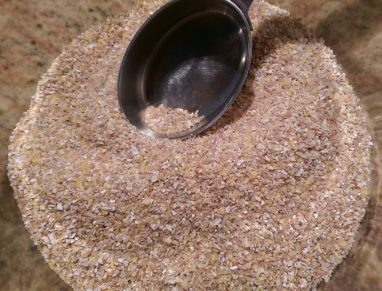
2 Tablespoons wheat bran

1/4 cup water, at room temperature

For the Dough

3 cups bread flour plus up to one cup more to add when kneading

3 Tablespoons brown sugar

1.5 teaspoons Kosher salt

1 Tablespoon instant dried yeast

3 Tablespoons cooked brown rice (I cooked up some brown rice, served some with dinner and froze 3 Tablespoon packets for future baking)

1.5 Tablespoons honey (or substitute Agave or other vegan sweetener, if so desired)

1/4 cup buttermilk (you can use any kind of “milk” and if you add 1 teaspoon of distilled vinegar to it and allow it to sit for at least 15 minutes, you will have a buttermilk substitute)

3/4 cup water, at room temperature

About 1 Tablespoon poppy seeds for topping (optional)

Directions

  1. Just before going to sleep the night before you bake the bread, prepare the soaker. Combine all of the soaker ingredients in a small bowl. The water will barely hydrate the grain. Cover the bowl with plastic wrap and leave at room temperature to initiate the enzyme action.
  2. The next day, stir together the flour, brown sugar, salt and yeast in a large bowl or the bowl of a standing mixer, using the paddle attachment. Add the soaker, rice, honey, buttermilk and water. Stir until the ingredients start to form a ball. If using a mixer, do this on a low speed. If there is some flour remaining, add a few drops of water.
  3. Either knead with the dough hook for 8 to 10 minutes, adding flour in small amounts until the dough is pliable but not sticky or knead by hand on a floured counter. I used my mixer but then still had to knead by hand, adding about 1/2 to 3/4 cup additional flour to get the dough the right consistency. The dough should be smooth and slightly shiny when it is ready. Lightly oil a bowl and transfer the dough to the  bowl, rolling it all around in the oil. Cover the bowl and allow it to ferment for 90 minutes or until doubled. Mine took exactly 90 minutes.
  4. Remove the dough from the bowl and press it by hand into a rectangle that is about 6 inches wide and 8 to 10 inches long. Fold it into thirds and pinch together the seams and fold under the ends. Place this packet into your oiled 9 x 5 inch bread pan. Brush with tap water, sprinkle on your poppy seeds, if using, and then spray lightly with oil (or a spray like PAM). Lightly cover with plastic wrap and allow to rise for up to 90 minutes or until the dough crests fully above the lip of the pan, doming about 1 inch above at the center. Don’t get hung up on the timing. Mine took just one hour to get there. Start heating your oven to 350 degrees F. after 30 minutes so it will be nice and hot by the time the dough was ready. 
  5. I baked mine for a total of 58 minutes, but every oven is different. I baked it for 25 minutes and then turned it. After 50 minutes, it looked like it wasn’t quite brown enough for me so I turned it again and gave it 8 more minutes. When I rapped on the top of the bread and it sounded hollow, I knew it was done. Turn it out immediately onto a cooling rack and allow to cool for at least 2 hours before slicing. When it is totally cool, you can wrap it tightly in foil. The bread should also freeze well should you be making a bigger batch. img_2459


Anadama Bread

img_2402After a simply gorgeous November day yesterday that seemed more like June, today is rainy and blah. I have no place I have to be having voted early and needing a distraction from tonight’s last game of the World Series. Go Cubs! So I decided to bake some bread, especially since I make sandwiches for my husband most days and because I am an unrepentant bread lover. I could fairly easily give up meat if I had to, but I would be desolate if I had to give up bread.

One year for my birthday, my husband bought me the award-winning book, the Bread Baker’s Apprentice by Peter Reinhart. It’s a beautiful book and wonderful to read but somehow I hadn’t gotten around to making anything from it. I decided it was time to remedy that. I was looking for a good sandwich/toast bread and settled on that old New England favorite – Anadama Bread, which has a corn meal and molasses base. I’d read other recipes for it but none that used both a “soaker” and a “sponge.” I was immediately intrigued and knew that this is what I would be trying. By making a soaker, the corn meal has an opportunity to develop a depth of flavor that it would otherwise lack. There was nothing terribly complicated in either the ingredients or the method so don’t be put off by the length of the directions. I ended up with 2 lovely, brown, fragrant loaves that we will be enjoying over the next week.

Anadama Bread

img_2410

Yield: Two 1.5 pound loaves

Ingredients

For the Soaker

1 cup stone ground yellow corn meal or polenta

1 cup tap water at room temperature

For the Dough

Approx. 4.5 cups of unbleached bread flour

2 teaspoons instant dried yeast

1 cup lukewarm water (90 to 100 degrees F, although I just do it by touch…)

1.5 teaspoons Kosher salt

6 Tablespoons molasses (it suggested Brer Rabbit Golden Molasses, rather than a full-flavored molasses)

2 Tablespoons solid shortening at room temperature

Canola Oil for the bowl

Cornmeal for dusting

Directions

  1. The day before making the bread (I did this before going to sleep), make the soaker by mixing the cornmeal with the water in a small bowl. Cover the bowl or container and allow it to sit at room temperature overnight.
  2. The next day, stir together 2 cups of the flour, the yeast, soaker and cup of water in a mixing bowl and cover it with a towel or plastic wrap. Allow this to ferment for one hour or until the sponge is poofy.
  3. Once the sponge is ready, add the remaining 2.5 cups of flour, the salt, molasses and shortening and stir this well until the mixture begins to form a ball. This can be done in a standing mixer on a low speed with the paddle attachment. The result should be a slightly sticky mass.
  4. Sprinkle some additional flour on the counter and turn the dough out and begin kneading it, sprinkling in more flour as needed to make a tacky but not sticky dough that is supple and pliable. This should take about 10 minutes of kneading. You can also make this using the dough hook of a standing mixer. The kneading would take 6 to 8 minutes, checking if more flour is needed.
  5. Lightly oil a large bowl and transfer the dough to the bowl, rolling it around to coat with the oil. Cover the bowl with plastic wrap and allow it to ferment (rise) at room temperature for about 90 minutes or until doubled in size.
  6. Remove the dough from the bowl and divide it into 2 equal pieces, which should each weigh about 24 ounces assuming you are into weighing things – which I am not. Shape the dough into loaves and place them into 9 by 5-inch bread pans that have been lightly oiled or sprayed with something like PAM. Lightly spray or brush the  tops with the oil and loosely cover with plastic wrap.
  7. Allow to rise at room temperature for between 60 to 90 minutes or until the loaves crest fully above the tops of the pans. (Mine were ready in 58 minutes)
  8. Preheat the oven to 350 degrees F with the oven rack in the middle position. Place the pans on a sheet pan and remove the plastic wrap. Mist or brush the tops with water and dust with cornmeal.
  9. Place the sheet pan in the oven and bake for 20 minutes. Rotate the pan for even baking and continue baking for another 20 to 30 minutes or until the loaves are a nice golden brown. The loaves should make a hollow sound when rapped with your knuckles or a wooden spoon. I like well-done loaves so might keep them in a few minutes longer.
  10. When the loaves are brown all over, immediately remove them from the pans and cool on a rack for at least one hour before slicing. I made sure that I had some softened butter on hand! img_2412


Lisa’s Vegan Challah

img_2291

As anyone who has been reading this blog knows, my godson has a deathly allergy to eggs. So I am always challenged to find or develop recipes for holiday treats that he can enjoy and where no one else feels cheated. I developed this vegan challah recipe a few years ago and now my niece (his mother) makes it every week. For the directions, just follow the previous recipe for my regular challah except where I have noted a few changes. I have not yet been able to get quite the same look for the glaze that I get with an egg-wash and have tried many different things. I would love to hear from any of you who has been successful in getting a beautiful glaze without eggs. The glaze I use is “okay” but I am still working on finding the perfect look.

UPDATE: I went to make this challah this morning and it suddenly occurred to me that because I use honey, this is really not vegan. For me the issue is eggs and dairy and I hadn’t focused on the honey. I have never made this with other vegan sweeteners such as sorghum or date syrup, but you could certainly try. You want a sweetener that has the texture of honey, is dark to lend color where there are no eggs and that also lends a rich, sweet taste. The amount used should not really change. It is simply a matter of finding the sweetener that you like.

Lisa’s Vegan Challah

Yield: One large braided loaf

Ingredients

1.25 cups of warm water

1/2 cup of granulated sugar

1 Tablespoon active dried yeast

1/4 cup Canola oil

A generous 1/8 cup of buckwheat honey (it lends color and richness when there is no egg)

1/8 teaspoon ground turmeric

1 generous teaspoon Kosher salt

3.5 to 4 cups of bread flour

Soy milk mixed with a vegetable yellow food coloring or mix with a small amount of turmeric for the glaze

Directions

Follow all of the directions of Lisa’s regular challah that precedes this, but use the soy milk glaze instead of the egg wash. If you wish,  you can add 6 ounces of raisins to the dough after the first addition of flour.


Lisa’s Challah

IMAG5280

Every Friday when my son was growing up, I would bake challah for Shabbat. When I started working outside the home I would start the challah before I left for work and then I would take the bowl of dough with me so I could punch it down. One day, my supervisor came into my office and asked me rather pointedly if I had beer in my office! I showed her the dough and all was forgiven. Admittedly it is much easier to simply deal with this at home, but I want you to know that bread can be very forgiving and that working is no excuse for denying yourself and your family this incredible treat. And if you are a Sabbath observer, anyone walking into your home smelling the bread fresh from the oven will immediately get into a peaceful, happy mood.

This recipe took years to get the proportions the way I want them and I have since passed the recipe down to Frances who now makes challah for Matthew every week. At first she wondered what they would possibly do with all of the bread, but now she realizes what a silly question that was. Once you taste this, you will never wonder about left-overs. Instead you will wonder how soon before it is time to bake it again!

Bread-making is as much art as science. In a factory, all conditions are controlled and so you can use exact measurements. At home, we don’t necessarily control for a humid day or a flour that may be be drier than the previous one or have more gluten. So you will have to learn to feel  what the dough should be like. You may get lucky and hit it out of the park on the first try or may simply be just okay. It’s worth keeping at it. This is why I make my bread by hand. If I add raisins for my husband or leave them out for my son, the yeast will react somewhat differently. If you use a machine you miss all of that. I have also learned in over 25 years of baking challah that it needs to rest. And you never leave the dough uncovered if you are not working with it. I allow my dough to rest after the initial additions of flour because I learned that I will need less flour that way and it keeps the dough from getting too heavy. We like a sweet, rich bread, but you don’t want it leaden. Sometimes I will finish the braid with poppy seeds or sliced almonds, but other times, just the egg wash is all that is needed. I have learned how to braid a six-braided loaf, but for the High Holidays, I make a braided crown. Versions of all of these can be found on YouTube and I strongly urge you to find a way of braiding that you find enjoyable. A simple three-strand loaf is fine too. Bread-making should be fun as well as incredibly satisfying. Yes, it takes some effort, but you will never taste a store-bought loaf this wonderful. And the effect on your family will be almost miraculous – children stop fighting, husbands and wives suddenly feel that maybe the week wasn’t quite so terrible and guests feel as if they have just walked into an island in time. Isn’t that what Shabbat is really all about?

I have also developed a vegan challah for my godson who is allergic to eggs. It is the best tasting vegan challah I have ever had, but if you are able to eat eggs, use this recipe. The vegan version is very good, but this is outstanding. Any leftovers will make perfect french toast or bread pudding – or simply eat it toasted with butter and cinnamon sugar or honey or jam.  The vegan recipe follows. I am not baking it this week, so I do not have a photo, but aside from the glaze which is lighter and not quite so shiny as with the egg glaze, the look is the same.

Lisa’s Challah 

IMG_0783

Yield: 1 large braided loaf (can be doubled)

Ingredients

2.25 teaspoons active dried yeast

1/3 cup warm water ( Turn on the tap and allow the water to get hot. If your finger can touch it and it feels hot but still comfortable, then that is the right temperature.)

1 generous teaspoon of granulated sugar or honey

2 large eggs plus one additional egg for the glaze mixed with a teaspoon of milk, soy milk or cold water

1 rounded teaspoon Kosher salt

1/4 cup canola or grapeseed oil

generous 1/8 cup honey (Any good quality honey will do. I happen to like Greek honey for this challah and buckwheat honey for my vegan challah.)

1/2 cup granulated sugar

About 3.5 cups of flour (bread flour is best, but you can use all-purpose, unbleached flour) Start with 3 cups of flour and then only add more – a little at a time – if the dough is very sticky. Room humidity, differences in flour brands and types can all affect how much you will actually use. Use the least amount that you need to produce a non-sticky, supple dough. Allowing the dough to rest in between steps allows the gluten to form and will result in a lighter dough that requires somewhat less flour.

Directions

  1. Heat your oven to the lowest temperature. For my oven that is 170 degrees F. Rinse a large bowl with hot water. There is no need to dry it. This is the bowl you will make the dough in.
  2. Place your yeast, the 1/3 cup of warm water and the teaspoon of sugar in the warmed bowl, mix everything through and allow the yeast to proof for about 10 minutes. If your yeast isn’t bubbly and you don’t smell that beery, yeasty smell then your yeast isn’t active and you might as well not waste  your ingredients. If it is bubbly…
  3. Add the sugar, salt, oil, honey, eggs and 3 cups of flour to the yeast mixture and vigorously stir 100 strokes. This gets out all lumps of flour and also gives your arm a good workout! If you wish to add raisins, you can add 6-8 ounces of raisins to the dough at this point.
  4. Add up to 1/2 cup additional flour, a little at a time and stir well to incorporate. I use a dough scraper to get all of the dough off of the sides of the bowl and at some point it is easier to work with than my heavy wooden spoon. It may take a little practice to feel what is the right time to stop adding flour, but don’t get discouraged, this is totally worth learning to make.
  5. Then cover the bowl with plastic wrap or a tea towel that has been rinsed in hot water and wrung out. Allow the dough to rest for 15 minutes. This prevents you from adding too much flour ultimately and keeps the bread from getting too heavy. Turn off the oven but leave the door closed.
  6. After 15 minutes, turn the dough out onto a lightly floured counter or board and knead the dough until it is smooth, supple and elastic. It should feel alive under your hands – not dead and heavy.
  7. Oil the work bowl with about 2 teaspoons of Canola or Grapeseed oil and roll the ball of dough in the oil. Flatten it slightly into a thick disk and cover it with plastic wrap or the tea towel rinsed in hot water and wrung out. Place the bowl in the warm oven with the door closed. Allow the dough to rise for 1.5 to 2.5 hours depending on  your dough. The dough should be poufy and when you stick 2 fingers into it the holes remain in place. It should be doubled. If you are at work or need to run out, punch the down down, cover it again and allow it to rise again. This will make for a finer crumb and can be done one more time if necessary.
  8. When you are ready, punch the dough down (children LOVE this part!) and turn it out onto your counter or board. Knead it for a few minutes (about 3 to 4) and cut the dough into the number of strands you will braid. Cover the dough and allow it to rest for 15 minutes. This will relax the dough and keep the strands from springing back on you.
  9. Now follow the instructions for braiding the dough. There are many sites and choose one that works for you. This is one that shows you a variety of braiding techniques or this for the way I learned to braid six strands. I don’t roll out my strands the way she does, but simply form them between my hands as if I were using play-doh. Try not to stretch the strands too much. Use gravity to help you get them the length you want. Place the braided dough on a baking sheet covered with parchment or a Silpat. Spray with a cooking spray like Pam or gently paint with Canola oil. Cover with waxed paper parchment and place in a warm spot to rise for about 45 minutes.
  10. While the dough is rising, heat your oven to 350 degrees F. When the dough has doubled, “paint” the braids with a mixture of egg and water or milk. If you wish to add poppy seeds or almonds or sesame seeds, sprinkle them over the egg wash and then dab with more egg wash. This is your “glue” and will prevent the seeds from falling right off.
  11. Bake for 25 minutes and then turn the dough and bake until a lovely dark brown and you can smell the bread. Tap it with your knuckles or a wooden spoon. If it makes a hollow sound, the bread is done. Gently move the bread to a cooling rack and allow it to cool before cutting. The bread will keep well (assuming you have leftovers) wrapped well in a large plastic bag or in foil. The bread can also be frozen, defrosted and warmed in a 325 degree F oven for about 10 minutes.

IMG_0745Note: This video shows you how to make a beautiful braided crown of challah. Some people make the dough the night before and allow it to slowly rise in the fridge to bake it the next day. I never have room in my fridge to do this, but don’t be afraid to try it. The point is that baking bread can fit into your lifestyle – it doesn’t have to rule it. Have fun.


Cheddar Onion Muffins

IMG_1952

I was looking for something simple to bake to go with some lamb chops, salad and flageolet beans. I came across a small spiral cookbook on my shelf called “The Marvelous Muffin” and started going through it, looking for a recipe. I came across one for Cheddar Onion Muffins, made a few minor tweaks and quickly produced something that turned the meal from good to something special. I prepared all of the ingredients a few hours before dinner and kept the dry ingredients separate from the wet. When I was ready to bake, all I had to do was assemble things which took only a couple of minutes.

Cheddar Onion Muffins

Yield: 1 dozen muffins

Ingredients

3/4 cup whole wheat flour

3/4 cup unbleached all-purpose flour

2 teaspoons baking powder

1/2 teaspoon baking soda

1/2 teaspoon Kosher salt

1 Tablespoon Demerara Sugar

3 rounded Tablespoons fried onions that have been crumbled (these are the kind in a can or you can get really great onions from http://www.nuts.com.

1/4 teaspoon garlic powder

6 ounces grated extra sharp cheddar cheese, with about 1/2 cup set aside (use a good block cheese and grate it yourself). You want 1.25 cups for the batter and 1/2 cup for the topping.

1 large egg

1.25 cups skim milk mixed with 1 teaspoon distilled vinegar or 1.25 cups buttermilk

Directions

  1. Preheat oven to 375 degrees F. Spray a muffin pan with non-stick spray and set aside.
  2. Combine the flours, baking powder, baking soda, sugar, fried onions, garlic powder and 1.25 cups cheese in a medium bowl and set aside.
  3. In a large bowl, beat the egg and stir in the milk. quickly add the flour mixture and using a whisk, mix just until the dry ingredients are moistened. Do not over-mix.
  4. Fill the muffin cups about 3/4 full and top each muffin with the 1/2 cup of grated cheese.
  5. Bake for about 28 minutes or until a toothpick comes out clean when inserted in the center and the cheese on top is golden.
  6. Turn out of the muffin tins but do not pile them on top of each other. The muffins are VERY moist and the weight of one muffin on top of another will squish them. These muffins do not need any additions to enjoy them.


Multigrain Bread

Multigrain bread 2

For some people, it’s a good steak. For me, it’s fresh homemade bread. While I buy commercial bread, it rarely lives up to what I think of as a great loaf, especially sandwich bread. I can get a great ciabbata or baguette nowadays, but a really great sandwich bread – well that’s another story.

This recipe makes two multigrain loaves and it uses both a 10-grain cereal as well as whole wheat and all-purpose flours. The loaves are rolled in rolled oats before the last rising which not only gives them a lovely homey look, but it adds a bit of extra texture and flavor. I generally make my breads completely by hand but this recipe called for using my standing mixer and I thought I would give it a try. I wish you could taste the depth of flavor in this bread between the whole wheat flour and 10-grain cereal and the honey – yummmmmmmmmm! You can keep your Paleo diets. Give ME a really great piece of homemade bread, still warm from the oven.

Multigrain Bread adapted from Olga’s Flavor Factory

Yield: 2 9×5 inch loaves

Ingredients

1 1/4 cups  7 or 10-grain hot cereal mix (Bob’s Mill or I bought mine from http://www.nuts.com)

IMAG0919_1

2 1/2 cups boiling water

3 cups unbleached all-purpose flour, plus extra for dusting work surface

1 1/2 cups whole-wheat flour

4 Tablespoons honey

4 Tablespoons unsalted butter, melted and cooled slightly

2 1/2 teaspoons instant yeast

1 Tablespoon Kosher salt

1/2 cup old-fashioned rolled oats or quick oats

Canola or Grapeseed Oil for the pans

Directions

  1. Pour the boiling water over the cereal mix and set aside for about an hour, until it cools to approximately 100 degrees Fahrenheit. You can tell if it is the right temperature if you can stick your finger into the cereal and it feels hot but not burning to the touch. During that time, the cereal will hydrate and soften, soaking in all that water.
  2. In another large bowl, combine the two flours and the salt together.
  3. Once the cereal has cooled, add the honey, melted butter and yeast. Mix to combine.
  4. In a standing mixer with a dough hook attachment, mix the dough on low speed, slowly adding in the mixed flours. You can also do this by hand if you don’t have a standing mixer. using a dough hook2
  5. Mix for about 2 minutes, until the dough forms a ball. Cover the bowl with plastic wrap and set it aside to rest for 20 minutes.
  6. Return the bowl to the mixer with the dough hook and knead the bread dough for about 7 minutes, until the dough has pulled away from the sides of the bowl. If you’ve mixed if for 3-5 minutes and it’s still sticking to the bowl, add 3 Tablespoons more flour. I did not need to add any additional flour. You can also knead the dough by hand on a lightly floured surface for about 8-10 minutes. IMAG0922
  7. Coat the dough lightly in oil, cover the bowl with plastic wrap or a towel and set aside to rise in a warm place until doubled in size, about 40 minutes.
  8. Preheat the oven to 375 degrees Fahrenheit. Grease 2  9×5 inch bread pans with oil. When the dough has doubled in size, cut the dough in half. Flatten each half of dough into a rectangle and then tightly roll the rectangle into a loaf.
  9. Lightly spritz each loaf with water or oil and roll in the oats, just enough for the oats to adhere to the bread. (My dough actually had enough oil on it that I didn’t need to add any additional oil or water.)
  10. Place into the loaf pans and set aside to rise until double in size, for another 40 minutes or so. (If your kitchen isn’t warm, it may take longer.)
  11. Bake for 35-40 minutes in the preheated oven. When the bread is golden brown on the outside and sounds hollow when tapped with a wooden spoon, it’s ready. Basically when it looks and smells like it’s ready, it is. Cool the bread in the loaf pans for about 5 minutes before taking them out of the loaf pans and onto a cooling rack. You can freeze the second loaf. Wrap it securely and freeze and then simply thaw and serve when you need more bread.

Multigrain bread3

Oat and Whole Wheat Sandwich Bread

The thought of making my own sandwich bread never really occurred to me, and when it did, all I could think was that it would be more effort than it was worth. After all, the local grocery store has quite the panoply of breads to choose from every week.

thumb__MG_6323_1024.jpg

But then I came across this post from “Smitten Kitchen” and immediately had to try it because it just sounded so healthy and wholesome.  As it turns out, it wasn’t nearly as difficult as I thought it would be, and the result when toasted with a little dollop of butter ended up having a texture and flavor that I would not have dreamed bread could have.  Now the only trouble is that I’m going through it so quickly!  Thank goodness the recipe yield two loaves.

Ingredients

5 cups whole-wheat flour
2 cups rolled oats (I used Quaker oats)
1 tablespoon kosher or coarse salt
3 tablespoons raw or brown sugar, honey or agave nectar (I like the honey)
1 large egg
1/4 cup vegetable oil, plus a little more to coat bowl
1 1/4 cups lukewarm water
1 1/4 cups lukewarm milk, any kind
1 1/2 tablespoons instant yeast

Make bread dough:

  1. In the bottom of large mixing bowl, combine water, milk and sugar or honey, then stir in yeast. Add egg and oil and whisk until combined. Add flour, oats and salt and if mixing with a machine, combine with paddle attachment at the lowest speed for 1 minute. If mixing by hand, use a large spoon and stir for 1 minute. The dough will be wet and coarse, let it rest for 5 minutes.
  2. If using a mixer, switch to the dough hook and mix the dough on medium-low for 2 more minutes. By hand, do the same with your spoon. The dough will seem firm and more smooth, ideally supple and sticky, but if it’s still very wet, add a bit more flour, a spoonful at a time. If it seems excessively stiff, add a little more water, a spoonful at a time.  Continue to mix with dough hook or by hand for 4 minutes.
  3. Scrape dough out onto lightly floured counter. Knead a few times, then form the dough into a ball. Oil your empty mixing bowl and return dough to it. Cover with plastic wrap and let proof at room temperature for 60 to 70 minutes, or until doubled in buik or transfer to the fridge and let it ferment overnight or up to 5 days. If proofing in the fridge, remove the dough before the fridge about 3 hours before you plan to bake it.

Form loaves:

  1. Turn dough onto a floured counter and divide it into two equal pieces. Press each gently into a rough rectangle-ish shape.
  2. Fold in sides so that the first dough is roughly the width of your bread loaf pan (about 9 inches).
  3. Roll from bottom to top and then put this log into your bread loaf pan, seam side down. Repeat with remaining dough.  (This is really important as otherwise your bread will rise lopsidedly and then you’ll have delicious but highly irregularly sized bread which is not great for sandwiches.)
  4. Let proof at room temperature for about an hour, or until the dough is about 1 inch above the rim of the baking pan. Halfway through, heat oven to 350 degrees F.

Bake bread:

  1. For 35 to 40 minutes, rotating pans once for even color. (Then again, I forgot to do this and it turned out beautiful anyways.)
  2. The internal temperature should read 190 degrees F. Remove loaves from tins and let cool on a rack. If you’re planning to freeze bread, let it cool completely before slicing it.

From Smitten Kitchen, Oat and wheat sandwich bread.

Farmer Bread

farm bread

Okay – I’ll say it. I LOVE BREAD!! and the crustier the better. Since I had just cooked up a batch of Mushroom Barley Soup which I will post tonight after we eat it, I wanted some great bread to go along with it. This wonderfully fragrant, crusty bread comes form the Jacques Pepin’s Table cookbook and it is fun to make and even better to eat.

Farmer Bread

Yield: One large round free-form loaf

Ingredients

4 cups, unbleached all-pupose flour, plus 1 teaspoon for sprinklin on the loaves

1/2 cup rye flour

1/2 cup wheat bran

1 teaspoon granulated yeast (active dry)

2.5 teaspoons Kosher salt

2.33 cups cool tap water plus 1 Tablespoon to throw on the oven floor

2 Tablespoons cornmeal

Directions

  1. Place the flours, salt, yeast and 2.33 cups of water in the bowl of a standing mixer. Mix at low speed for 3 to 4 minutes to create a smmoth, but slightly sticky dough. If you have a large food processor you could do it in there and it should come together in about a minute.
  2. Transfer the dough to a deep glass or ceramic bowl or a plastic measuring bucket (If you make a lot of bread, these are great!). Cover with a lid or plastic wrap and allow to rise at room temperature overnight (12-14 hours).
  3. After the dough has risen, bring the sides of the dough into the center of the bowl, folding it in on itself. It is easier to use a dough spatula than your hands becasue it will be sticky. If you use your hands, lightly flour them first. Press down on the dough to get all of the excess air out and form it into a ball as best you can. Line a baking sheet with parchment or a Silpat and sprinkle it with the cornmeal. Place the dough seam side down in the center of the pan. Invert the bowl or bucket over the dough. It should be bigger than your dough circumferance so it won’t stick.
  4. Allow the dough to rise at room temperature for another 1.5 hours.
  5. About 20 minutes before the end of the rising time, preheat your oven to 425 degrees F.
  6. Sprinkle the risen dough with the teaspoon of flour and using a serrated knife, cut some decorative slits across the top. Place the loaf in the hot oven and throw a Tablespoon of tap water into the bottom of the oven – NOT OVER THE DOUGH. Immediately close the oven door and bake for 15 minutes. Then lower the heat to 400 degrees F and continue baking for 1 hour more.
  7. Remove the bread from the baking sheet and allow to cool on a wire rack for at least 3 hours before cutting. Wrapped in plastic, the bread will keep for up to 4-5 days and it can be frozen.